
The Impact of AI Logistics Document Verification in 2026: Why Traditional Processing Can No Longer Keep Up
How automated classification, computer vision, and HITL verification are eliminating manual bottlenecks across global freight operations.
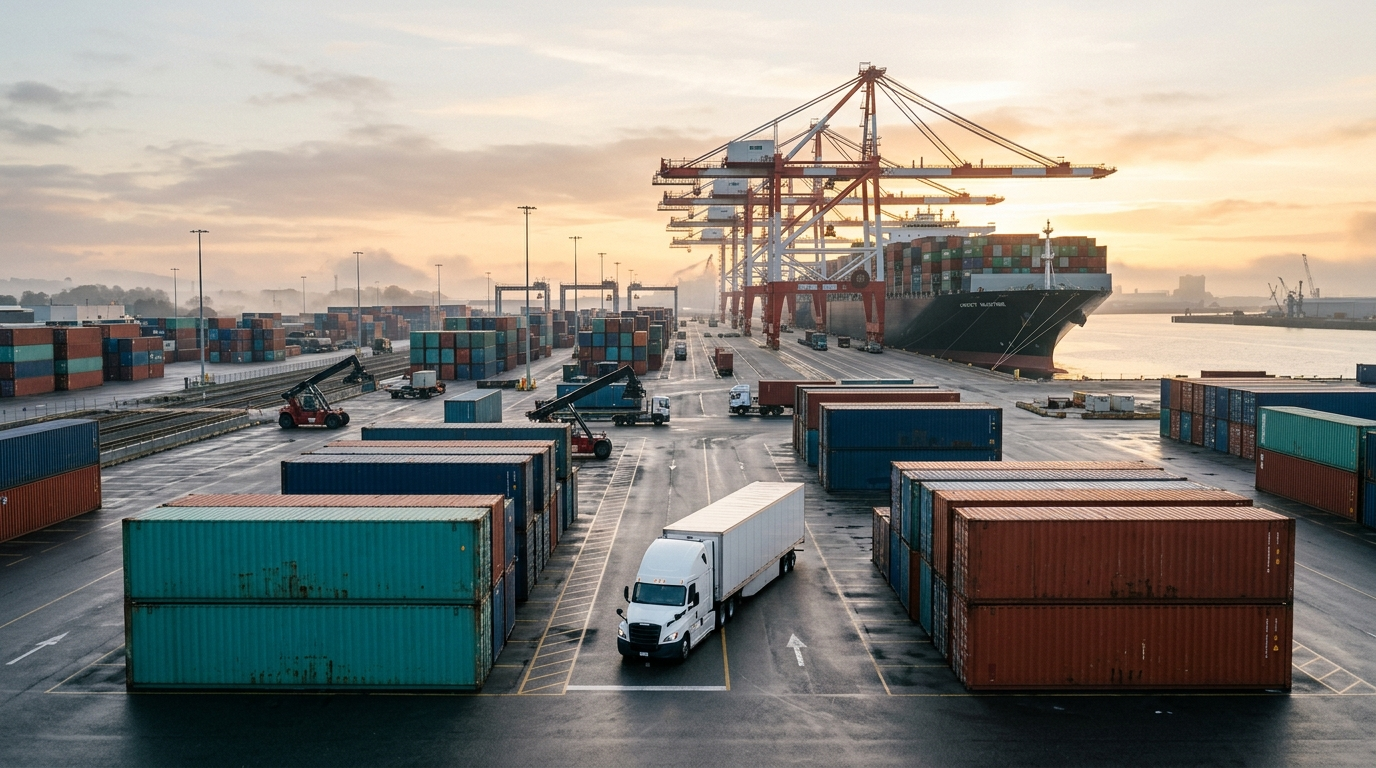
The logistics and supply chain industry is evolving faster than ever. In 2026, businesses are managing higher shipment volumes, tighter delivery timelines, and increasingly complex compliance requirements. Every shipment generates critical documents from Bills of Lading (BoL) and Proof of Delivery (POD) to e-Way Bills, invoices, packing lists, and customs documents. Processing these documents quickly and accurately has become essential for efficient logistics operations.
Despite rapid digital transformation, many organizations still rely on manual document verification. This traditional approach slows operations, increases costs, and introduces costly human errors. As supply chains become more connected and customer expectations continue to rise, manual document processing is no longer sustainable.
AI-powered logistics document verification is transforming how logistics providers capture, validate, and process shipment documents. By automating document extraction and verification, businesses can improve accuracy, accelerate workflows, and build more resilient supply chains.
Why Traditional Logistics Document Processing Falls Short
Traditional logistics document management depends heavily on manual data entry and human verification. While this method has been used for years, it struggles to meet the demands of today’s fast-moving logistics environment.
- Manual data entry errors that result in shipment delays and billing discrepancies
- Slow document verification, creating bottlenecks in transportation and warehouse operations
- High operational costs caused by repetitive administrative work
- Difficulty processing large document volumes during seasonal demand spikes
- Compliance risks from missing, incomplete, or inaccurate documentation
- Limited visibility because shipment information is scattered across multiple systems
As logistics networks become increasingly digital, manual processes simply cannot deliver the speed, reliability, and scalability required in 2026.
How AI is Transforming Logistics Document Verification
Artificial Intelligence has become a key driver of digital transformation across logistics and supply chain operations. Modern AI-powered document verification software automatically captures, classifies, validates, and extracts information from multiple document formats with exceptional speed and accuracy.
AI-powered logistics document processing can automatically handle:
- Bills of Lading (BoL)
- Proof of Delivery (POD)
- e-Way Bills
- Purchase and Sales Invoices
- Packing Lists
- Delivery Challans
- Shipping Instructions
- Customs and Export Documents
- Freight and Transportation Documents
Key Benefits of AI Logistics Document Verification
Organizations implementing AI-powered logistics document verification experience significant operational improvements across their forwarding operations.
Faster Processing
AI reduces document processing time from hours to minutes by automatically extracting shipment information without manual intervention.
Improved Accuracy
Advanced AI models reduce human errors by intelligently validating extracted data against predefined business rules, improving billing accuracy and shipment tracking.
Enhanced Compliance
AI automatically checks document completeness and identifies missing or inconsistent information, helping organizations meet regulatory and customer compliance requirements.
Lower Operational Costs
Automating repetitive document processing significantly reduces administrative workload, allowing employees to focus on customer service and strategic logistics planning.
Scalability
Whether processing hundreds or thousands of logistics documents daily, AI scales efficiently without requiring additional administrative staff.
Better Visibility
Structured digital document data provides real-time visibility into shipment status, enabling faster decision-making and improved customer communication.
Why Businesses Are Moving Away from Traditional Methods
In 2026, AI is no longer viewed as an emerging technology—it has become a competitive necessity. Organizations adopting AI-driven logistics document processing achieve:
- Faster shipment processing
- Reduced manual data entry
- Improved documentation accuracy
- Stronger regulatory compliance
- Lower operational costs
- Increased scalability
- Better customer satisfaction through faster deliveries and reliable documentation
As logistics operations continue to expand, automation allows businesses to handle increasing document volumes without proportionally increasing operational costs.
How Docsynecx Simplifies Logistics Document Verification
Docsynecx is an AI-powered Intelligent Document Processing (IDP) platform built to automate logistics document verification from document receipt to ERP integration.
The platform intelligently extracts, validates, and processes information from Bills of Lading, Proof of Delivery, e-Way Bills, Freight Invoices, Packing Lists, Delivery Challans, Shipping Instructions, and Customs Documentation.
Using advanced OCR, Artificial Intelligence, Machine Learning, and Human-in-the-Loop (HITL) validation, Docsynecx delivers highly accurate document processing while reducing manual intervention.
- AI-powered document classification
- Intelligent data extraction
- Automatic document validation
- Duplicate document detection
- Confidence-based verification
- Human validation for low-confidence fields
- Audit-ready document management
- Workflow automation
- Secure cloud and on-premise deployment
Seamless Integration with CargoWise, CargoNet, TMS, and ERP Systems
Processing logistics documents is only one part of the workflow. The real value comes from automatically delivering verified information into the business systems that logistics teams use every day.
Docsynecx is designed with an API-first architecture, making integration with logistics platforms, Transportation Management Systems (TMS), ERP solutions, and accounting software simple and secure.
CargoWise Integration
Automatically extract shipment information from logistics documents and synchronize validated data into CargoWise, reducing manual entry and improving operational efficiency.
CargoNet Integration
Transfer AI-verified shipment and logistics document data directly into CargoNet to accelerate freight operations and improve document consistency.
Transportation Management Systems (TMS)
Integrate with TMS platforms to automate freight documentation, shipment planning, transportation workflows, and delivery tracking using secure REST APIs, web services, or file-based integrations.
A Complete AI-Powered Logistics Workflow
With Docsynecx, logistics document processing becomes a fully automated workflow:
- Receive documents from email, scanners, mobile devices, cloud storage, FTP servers, or customer portals
- AI automatically classifies each document
- Extract shipment information using advanced OCR and AI
- Validate extracted data using configurable business rules
- Review only low-confidence fields through Human-in-the-Loop validation
- Automatically synchronize verified information with CargoWise, CargoNet, TMS, ERP systems, TallyPrime, or custom applications
- Archive documents securely with complete audit trails and searchable digital records
Conclusion
The logistics industry in 2026 demands speed, accuracy, compliance, and scalability. Traditional document verification methods can no longer support the growing complexity of modern supply chains.
Businesses that continue relying on manual processing face higher operational costs, shipment delays, compliance risks, and reduced productivity.
AI-powered logistics document verification offers a smarter approach by automating document extraction, intelligent validation, and seamless integration with business systems. With Docsynecx, organizations can streamline document workflows, improve data accuracy, accelerate shipment processing, and connect verified information directly to CargoWise, CargoNet, Transportation Management Systems (TMS) and ERP platforms.
 Logistics9 min read
Accurate Data Extraction at Scale: How Docsynecx Handles Bulk Document Uploads for Enterprise Workloads
Docsynecx eliminates limitations by offering AI-driven bulk document processing that transforms scattered, high-volume paperwork into clean, structured, and validated data.
 Logistics9 min read
Measuring ROI from Document AI: Transforming Document Workflows into Strategic Advantage
Explore how ROI analysis reveals the tangible benefits of implementing Document AI in transforming document-heavy workflows into strategic assets.
 Logistics8 min read
The Future of OCR: AI-Powered Document Processing Revolution
Discover how advanced OCR technologies and AI-powered document processing are transforming business workflows across industries.